My Team
http://peainmysoup.blogspot.com/
http://macadocious.blogspot.com/
http://dsgnproberg.blogspot.com/
http://lynchdsgn200.blogspot.com/
http://jklinedesign200.blogspot.com/
J08: http://breannaraynedsgn200.blogspot.com/2011/02/j08a05.html
J09: http://breannaraynedsgn200.blogspot.com/2011/03/j09a05.html
I believe that this project in general went extremely well, especially within my team. Everyone worked together and in doing so we came up with a great idea, the "fire fLITE" childrens bedside lamp. The overall process was interesting, especially when comparing the first page of ideas and designs for the lamp with the final product. All in all, the overall project gave me a sense of what it really is like to be a designer; brainstorming with ideas and designs, some of which were thrown out immediately, and finally all agreeing and designing the final finished product (both the lamp, packaging, and kiosk) was a fun experience. My overall contributions were (along with everyone in the group) brainstorming and coming up with ideas, doing some research on my own to figure out the type of lamp and what could be included, and designing the final look of the packaging. I believe this project was definitely my favorite out of all that we have done in the class, and I also believe it really helped in allowing me to see what a true designer does.
Tuesday, March 8, 2011

CR10
I enjoyed Design 200 immensely. I had always contemplated majoring in Interior Design, and taking this class helped me understand what design was really all about. It informed me that what I had thought was "interior design" was really more along the lines of "interior home decorating." The interior design we talked about in class was much more interesting, and attracted me towards this major even more now that I understood it better.
I also enjoyed the various projects and journals we were assigned. One of my favorites was the letter form project. It was fun and interesting to notice how everyday objects found in the home, nature, or even in architecture resembled letters from the alphabet.
Among the lectures, I liked the various films we watched, in particular the one that focused on copyright laws. Not only was the movie interesting, but it introduced me to a band that I know love!
All in all, I believe that everything done this quarter in design 200 was great. I would encourage future students to take this class because it could, for some (like it did for me), change their entire outlook on the world of design.
I also enjoyed the various projects and journals we were assigned. One of my favorites was the letter form project. It was fun and interesting to notice how everyday objects found in the home, nature, or even in architecture resembled letters from the alphabet.
Among the lectures, I liked the various films we watched, in particular the one that focused on copyright laws. Not only was the movie interesting, but it introduced me to a band that I know love!
All in all, I believe that everything done this quarter in design 200 was great. I would encourage future students to take this class because it could, for some (like it did for me), change their entire outlook on the world of design.
Wednesday, March 2, 2011
J09/A05
My Team
http://peainmysoup.blogspot.com/
http://macadocious.blogspot.com/
http://dsgnproberg.blogspot.com/
http://lynchdsgn200.blogspot.com/
http://jklinedesign200.blogspot.com/
This week my team focused on finalizing our project and figuring out last minute details. Everyone worked together to put finishing touches on our project; the team drew up pictures and detailed our product's look, and I contributed by designing the look of the packaging. In addition to finalizing all of the drawings and pictures, we began working on our presentation of the finished product, which went well. All in all, I believe that our team worked together well and our entire project came together smoothly and efficiently; I think our finalized presentation will be delivered and viewed well.


http://peainmysoup.blogspot.com/
http://macadocious.blogspot.com/
http://dsgnproberg.blogspot.com/
http://lynchdsgn200.blogspot.com/
http://jklinedesign200.blogspot.com/
This week my team focused on finalizing our project and figuring out last minute details. Everyone worked together to put finishing touches on our project; the team drew up pictures and detailed our product's look, and I contributed by designing the look of the packaging. In addition to finalizing all of the drawings and pictures, we began working on our presentation of the finished product, which went well. All in all, I believe that our team worked together well and our entire project came together smoothly and efficiently; I think our finalized presentation will be delivered and viewed well.


Sunday, February 27, 2011
J08/A05
My Team
http://peainmysoup.blogspot.com/
http://macadocious.blogspot.com/
http://dsgnproberg.blogspot.com/
http://lynchdsgn200.blogspot.com/
http://jklinedesign200.blogspot.com/
My team decided to "bring the outdoors indoors" throughout our project. Our idea is to take the Coleman market of goods and focus it more onto the future generation of children and the betterment of the environment. Throughout our discussion, my team has been working together seamlessly; everyone has been contributing ideas and conversation, which is making the overall process a simple and enjoyable one. Along with other things, I have tried to contribute essentially by researching a variety of products and ideas online that relate to the project, drawing and contributing ideas, and participating in group conversation, all of which I believe is helping the group move forward quickly and efficiently.


http://peainmysoup.blogspot.com/
http://macadocious.blogspot.com/
http://dsgnproberg.blogspot.com/
http://lynchdsgn200.blogspot.com/
http://jklinedesign200.blogspot.com/
My team decided to "bring the outdoors indoors" throughout our project. Our idea is to take the Coleman market of goods and focus it more onto the future generation of children and the betterment of the environment. Throughout our discussion, my team has been working together seamlessly; everyone has been contributing ideas and conversation, which is making the overall process a simple and enjoyable one. Along with other things, I have tried to contribute essentially by researching a variety of products and ideas online that relate to the project, drawing and contributing ideas, and participating in group conversation, all of which I believe is helping the group move forward quickly and efficiently.


Monday, February 21, 2011
RR08
In reading the entirity of Heskett's book, I learned a great deal about the past, present and future aspects of design. There are multitudes of thoughts and actions that go into the design process, many of which I hadn't contemplated before. In the final chapter, one point that struck me as interesting was the question of whether future designers will be "devoting their skills to the highest commercial bidder without consideration of the ends they serve," or using their skills and taking into consideration a "dimension of social and environmental purpose requiring acknowledgement of their work." I personally hope for the latter, because I am a firm believer in focusing on the betterment of society, the economy, and the environment. While the goal of most people in the work force is to make money, I think that there should be something more. Designers do what they do best for the customer, and I believe that they should continue to keep this in mind in the future.
Wednesday, February 16, 2011
CR07
Eames description of design not as a form of art, but as a form of purpose is an interesting way of viewing design. I had always thought of design simply as an artistic method, but I now realize that it really is more of a purpose; design is for the consumer, the customer, not for the pleasure of the designer. This, as we discussed earlier in the quarter, is one aspect that distinguishes artists from designers. Art is created for the artist, while design is created for others.


Monday, February 14, 2011
RR07
Throughout the course of reading this book, I have been repeatedly shocked at the way human beings are treating the earth. I had known that our world's condition was terrible, but I have been greatly enlightened to the fact that there are things going on that need to be stopped now. In the final chapter, the Ford Motor Company is showed to have made great efforts to redesign their enterprise in an environmental and employee friendly way. If a huge well known company like Ford can do this, why can't everyone? I believe that steps need to be taken now to protect our future, and that everyone needs to realize it before it is too late.
J07
CAMPING
http://www.coleman.com/
http://www.campmor.com/
http://www.rei.com/
http://www.gandermountain.com/
http://www.theoutdoorsource.com/


INDOOR
http://www.ikea.com/
http://www.la-z-boy.com/
http://www.kirklands.com/
http://www.potterybarn.com/
http://www.chiasso.com/


A home good is an item that one buys or creates to serve a purpose inside the home, whether it is purely for decorative reasons, or to act as an appliance or object that assists one in their day to day activities.
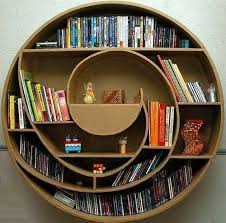
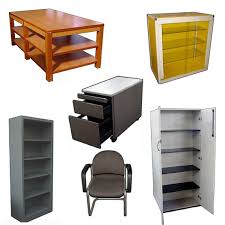
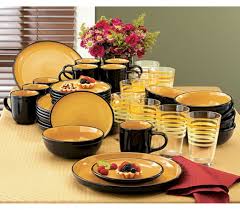
http://www.coleman.com/
http://www.campmor.com/
http://www.rei.com/
http://www.gandermountain.com/
http://www.theoutdoorsource.com/
INDOOR
http://www.ikea.com/
http://www.la-z-boy.com/
http://www.kirklands.com/
http://www.potterybarn.com/
http://www.chiasso.com/
A home good is an item that one buys or creates to serve a purpose inside the home, whether it is purely for decorative reasons, or to act as an appliance or object that assists one in their day to day activities.
Wednesday, February 9, 2011
CR06
There were several aspects of the movie we viewed in class that interested me. I never realized how many songs that I love to listen to (for example, Led Zeppelin) are based on songs from the past. Although this portrays musicians in an unoriginal light, one thing that I observe is that there are only so many notes in music; they haven't explicitly copied the exact song from the past, they only touched on a piece of it to assist their creation. Another point I found highly interesting was the fact that writers are able to include anything they want in their work, regardless if it is their personal idea or not. All they have to do if they borrow someone else's idea is simply cite it. Why is it perfectly legal for writers to engage in this, but illegal for anyone who tries to include movies or music not of their own creation?
Monday, February 7, 2011
J06
Design and the Environment
The environment is something I am passionate about. If our world continues on the industrial-driven path that it has traveled for the past century, it is almost a guaruntee that our way of life will change drastically, and not in a beneficial way. While reading Cradle to Cradle, I have become more concerned about the earth's future. My generation has the power to fix the damage done in the past. Designers have one of the hardest jobs: coming up with new ideas and products that result in improving our world, not harming it. I believe that relating design and environment is the most important aspect of the vast world of design. If the betterment of human life is the essence and goal of production, then creating that which enhances and protects life should be one of the prevelant concerns of everyone, but designers in particular.
This environmental design program was very interesting to me because it stressed that this course is not one based solely on a single discipline. Many other ideas and activites are involved, such as computer technology, painting, and others. Environmental design can be used to benefit society and aid in all aspects of design, not just the environment and only the environment.
I love how a goal of this project was to use renewable resources and recycle them back into the environment. It also shows that the discipline of environmental design is linked to other disciplines, in this case, architecture. Working together allowed the students to come up with a plan that was functional and beneficial.
http://www.reddawn.com/featart11.html
Texas' Green Building Program is one that I believe should expand throughout the world. Their focus on the conservation of natural resources, the preservation of the environment, and promotion of the economy and health of citizens is more than admirable. The article goes deeper into explaining the new ideas planned out for the American home; a smaller, more energy efficient space able to serve a variety of purposes. In particular, the plans for windows and lighting are extremely interesting, especially that which states that windows will soon become remote controlled to adjust to light and privacy.
http://www.reddawn.com/featart1-98.html
After reading this article, I have one thing to say: bamboo is amazing. Knowing what we know about its benefits, it is a wonder to me that products made of this incredible plant are not more prevelant in the market. Almost every aspect of the production and function of bamboo beats other means. I believe that designers today can use this resource in a wide variety of ways, considering especially its environmental benefits. Its extreme durability and attractive look can make it a new contender in being one of the most used products designers can apply to a wide variety of items, including the building of houses and furniture.
http://www.reddawn.com/featart4-98.html
The many advantages of synthetic decking heavily outweigh its competitors, in my opinion. As stated in the article, it is impervious to insects and moisture, and can come in an extensive variety of looks. The use of recycled materials to produce something like this has also given rise to the ability to manufacture other things just as efficiently. Besides being a prime contender for home and garden use, other products rendered from recycled materials are taking shape. Environmental designers, along with any designer, can take into account the many benfits that recycled materials have to offer. Far from only preserving and benefitting the environment, many of these products are more durable and client friendly than products made from other more detrimental materials.
The environment is something I am passionate about. If our world continues on the industrial-driven path that it has traveled for the past century, it is almost a guaruntee that our way of life will change drastically, and not in a beneficial way. While reading Cradle to Cradle, I have become more concerned about the earth's future. My generation has the power to fix the damage done in the past. Designers have one of the hardest jobs: coming up with new ideas and products that result in improving our world, not harming it. I believe that relating design and environment is the most important aspect of the vast world of design. If the betterment of human life is the essence and goal of production, then creating that which enhances and protects life should be one of the prevelant concerns of everyone, but designers in particular.
This environmental design program was very interesting to me because it stressed that this course is not one based solely on a single discipline. Many other ideas and activites are involved, such as computer technology, painting, and others. Environmental design can be used to benefit society and aid in all aspects of design, not just the environment and only the environment.
I love how a goal of this project was to use renewable resources and recycle them back into the environment. It also shows that the discipline of environmental design is linked to other disciplines, in this case, architecture. Working together allowed the students to come up with a plan that was functional and beneficial.
http://www.reddawn.com/featart11.html
Texas' Green Building Program is one that I believe should expand throughout the world. Their focus on the conservation of natural resources, the preservation of the environment, and promotion of the economy and health of citizens is more than admirable. The article goes deeper into explaining the new ideas planned out for the American home; a smaller, more energy efficient space able to serve a variety of purposes. In particular, the plans for windows and lighting are extremely interesting, especially that which states that windows will soon become remote controlled to adjust to light and privacy.
http://www.reddawn.com/featart1-98.html
After reading this article, I have one thing to say: bamboo is amazing. Knowing what we know about its benefits, it is a wonder to me that products made of this incredible plant are not more prevelant in the market. Almost every aspect of the production and function of bamboo beats other means. I believe that designers today can use this resource in a wide variety of ways, considering especially its environmental benefits. Its extreme durability and attractive look can make it a new contender in being one of the most used products designers can apply to a wide variety of items, including the building of houses and furniture.
http://www.reddawn.com/featart4-98.html
The many advantages of synthetic decking heavily outweigh its competitors, in my opinion. As stated in the article, it is impervious to insects and moisture, and can come in an extensive variety of looks. The use of recycled materials to produce something like this has also given rise to the ability to manufacture other things just as efficiently. Besides being a prime contender for home and garden use, other products rendered from recycled materials are taking shape. Environmental designers, along with any designer, can take into account the many benfits that recycled materials have to offer. Far from only preserving and benefitting the environment, many of these products are more durable and client friendly than products made from other more detrimental materials.
RR06
I found it quite interesting to learn that detergent is manufactured in the same way for all parts of the world, regardless of the needs of that particular area. The same amount of harmful chemicals are affecting everyone, putting aside the fact that what might be necessary in one context might be unnecessary or harmful in another. Another point I think that deserves consideration is in chapter one under the heading of "Crude Products." The fact that antimony is completely unnecessary for the production of polyester, yet is still used is absolutely baffling to me. Why would someone include a potentially life-threatening substance in a widely used product if it can be made without it?
J05
For my little adventure, I decided to make an extravagant anniversary dinner for my boyfriend, AKA the pickiest eater I've ever met.
1. Try and locate a meal worthy of Lee's high standards
2. Who doesn't love Italian food?
3. Giada de Laurentiis' food always looks amazing, even if I don't like the ingredients.
4. Choice: chicken and shrimp with a pancetta chimichurri
5. Chimichurri....what?
6. Chimichurri: a variant of green sauce, often used as a marinade
7. That is not enough. Let's add in some pancetta buttermilk biscuits with a cinnamon sugar butter!
8. Printing off the list, and cutting in half the recipe (is it bad that I need a calculator to cut 1/3 in half?)
9. Off to the grocery store
10. Number one pet peeve: when you are stopped at a light behind two other cars; the first car behind the light is going to turn left, the car behind that car (and in front of you) is going straight. The light changes to green, and the car in front of you refuses to acknowledge that it is ALLOWED to go around the right side of the person turning left. Instead, they wait the entire time span alotted for the green light, therefore making zero progress in the trip
11. 5 days later, I arrive at the grocery store
12. Where is the list? Oh right...sitting on the laundry machine at home
13. Drive all the way back to find the list exactly where I knew it was
14. Return to the grocery store, luckily without any moronic drivers in my way
15. Decide against getting a shopping cart, I will only need a small carrying basket
16. Wonder why the carrying baskets are located no where near the shopping carts...
17. Get out my list, I need
18. Chicken
19. Pancetta
20. Shrimp
21. Garlic
22. Boxed biscuit mix
23. Fontina cheese
24. Buttermilk
25. A head of lettuce
26. A red pepper
27. A vanilla bean (only one!)
28. There is a box of peanuts mixed into the vegetable section of the store...why?
29. I do not think there is one vanilla bean in this place...let alone several
30. Moving on to the cheese section; who decided to put dairy products next to vegetables?
31. No fontina cheese. No international cheese of any kind, for that matter
32. Cheese next to milk. How convenient :)
33. I only need a small amount of buttermilk, but am forced to buy a huge container of it, which I am sure will never be used again
34. Meat products next to milk. I am inwardly pleased that I am moving in a giant circle around the store and that I don't have to backtrack
35. Amish chicken? Why can't I buy non-Amish chicken?
36. I've always known that shrimp should be de-veined, but I never actually knew what de-veined meant. I ask Lee, who informs me. I thank God that I am not a fan of seafood
37. There is a center section in the middle of the aisle that holds international food; my pancetta and fontina has been found!
38. Boxed biscuit mix...does it exist? I can only find pre-made tubed biscuits
39. Spend about 15 minutes walking up and down every single aisle in the store looking for these boxed biscuits
40. Spend 10 more minutes arguing with Lee which one of us will break down and ask an employee for assistance
41. I win. He asks
42. We are directed to the exact place we walked by about 7 times. There are 3 tiny packages of boxed biscuits amidst a plethora of pancake mix
43. I learn that pancake mix also doubles for biscuit mix; good to know that NOW >:(
44. We add donuts to the list; I am thinking that whoever designed this store knew that an unsuspecting customer (i.e., me) would be walking out of the store and pass by a table of assorted cakes, muffins and donuts, which they would find completely irresistable
45. I find that Lee has been sneaking other items into the basket while I was hunting for things on the list.
46. I find that choosing a basket over a cart was a mistake.
47. Someone should make a carrying conveyance sized somewhere in between a cart and a basket.
48. I see a grown man wheeling around a miniature baby sized shopping cart and almost ambush him for it
49. Since Lee has upgraded our amount of food, we no longer qualify for the "10 items or less" aisle. Do they really count how many items you have anyway? I am almost positive I've gone through that aisle when I've had more than 10 items, which means that that rule is simply bogus and false advertising
50. I realize as we check out how many plastic bags we are being handed and wish I had brought my own bags that won't kill the environment
51. I feel like that trip called for a lot more effort than necessary...
52. Now that I am exhausted I have to cook an elegant dinner
[Now I know this isn't part of the assignment, but I just want to add that it took me literally 3 hours to complete this meal. Giada included on the recipe that the estimated time would be a half an hour........]
1. Try and locate a meal worthy of Lee's high standards
2. Who doesn't love Italian food?
3. Giada de Laurentiis' food always looks amazing, even if I don't like the ingredients.
4. Choice: chicken and shrimp with a pancetta chimichurri
5. Chimichurri....what?
6. Chimichurri: a variant of green sauce, often used as a marinade
7. That is not enough. Let's add in some pancetta buttermilk biscuits with a cinnamon sugar butter!
8. Printing off the list, and cutting in half the recipe (is it bad that I need a calculator to cut 1/3 in half?)
9. Off to the grocery store
10. Number one pet peeve: when you are stopped at a light behind two other cars; the first car behind the light is going to turn left, the car behind that car (and in front of you) is going straight. The light changes to green, and the car in front of you refuses to acknowledge that it is ALLOWED to go around the right side of the person turning left. Instead, they wait the entire time span alotted for the green light, therefore making zero progress in the trip
11. 5 days later, I arrive at the grocery store
12. Where is the list? Oh right...sitting on the laundry machine at home
13. Drive all the way back to find the list exactly where I knew it was
14. Return to the grocery store, luckily without any moronic drivers in my way
15. Decide against getting a shopping cart, I will only need a small carrying basket
16. Wonder why the carrying baskets are located no where near the shopping carts...
17. Get out my list, I need
18. Chicken
19. Pancetta
20. Shrimp
21. Garlic
22. Boxed biscuit mix
23. Fontina cheese
24. Buttermilk
25. A head of lettuce
26. A red pepper
27. A vanilla bean (only one!)
28. There is a box of peanuts mixed into the vegetable section of the store...why?
29. I do not think there is one vanilla bean in this place...let alone several
30. Moving on to the cheese section; who decided to put dairy products next to vegetables?
31. No fontina cheese. No international cheese of any kind, for that matter
32. Cheese next to milk. How convenient :)
33. I only need a small amount of buttermilk, but am forced to buy a huge container of it, which I am sure will never be used again
34. Meat products next to milk. I am inwardly pleased that I am moving in a giant circle around the store and that I don't have to backtrack
35. Amish chicken? Why can't I buy non-Amish chicken?
36. I've always known that shrimp should be de-veined, but I never actually knew what de-veined meant. I ask Lee, who informs me. I thank God that I am not a fan of seafood
37. There is a center section in the middle of the aisle that holds international food; my pancetta and fontina has been found!
38. Boxed biscuit mix...does it exist? I can only find pre-made tubed biscuits
39. Spend about 15 minutes walking up and down every single aisle in the store looking for these boxed biscuits
40. Spend 10 more minutes arguing with Lee which one of us will break down and ask an employee for assistance
41. I win. He asks
42. We are directed to the exact place we walked by about 7 times. There are 3 tiny packages of boxed biscuits amidst a plethora of pancake mix
43. I learn that pancake mix also doubles for biscuit mix; good to know that NOW >:(
44. We add donuts to the list; I am thinking that whoever designed this store knew that an unsuspecting customer (i.e., me) would be walking out of the store and pass by a table of assorted cakes, muffins and donuts, which they would find completely irresistable
45. I find that Lee has been sneaking other items into the basket while I was hunting for things on the list.
46. I find that choosing a basket over a cart was a mistake.
47. Someone should make a carrying conveyance sized somewhere in between a cart and a basket.
48. I see a grown man wheeling around a miniature baby sized shopping cart and almost ambush him for it
49. Since Lee has upgraded our amount of food, we no longer qualify for the "10 items or less" aisle. Do they really count how many items you have anyway? I am almost positive I've gone through that aisle when I've had more than 10 items, which means that that rule is simply bogus and false advertising
50. I realize as we check out how many plastic bags we are being handed and wish I had brought my own bags that won't kill the environment
51. I feel like that trip called for a lot more effort than necessary...
52. Now that I am exhausted I have to cook an elegant dinner
[Now I know this isn't part of the assignment, but I just want to add that it took me literally 3 hours to complete this meal. Giada included on the recipe that the estimated time would be a half an hour........]
Monday, January 31, 2011
CR05
One thing that struck me as interesting in the lecture this week was that all the different colors have a different meaning. I knew that stop signs were red at that it had an association with a warning and danger, but I did not know that red was the color that people are able to see from the farthest distance away. I also found that when green words are placed on a red background they seem to vibrate, which I had noticed before, but never really thought about.


RR05
I've only read the introduction, but I am already intrigued and interested by this book. Helping the environment has always been a passion of mine, and I can tell that in Cradle to Cradle the author's concern mirrors my own. One point that jumped out at me was on page six: "For the environment to be healthy...industries must be regulated and restrained. For industries to fatten, nature cannot take precedence." These two viewpoints are those expressed by almost everyone, and I feel that there must be a way to break the barrier that separates industry and environment, and the new generation of designers just might be the answer. Another thing that struck me hard was the last paragraph in the introduction, which I will not write out in its entirity. However, I suggest that everyone read it and contemplate the fact that we must attempt to realize the impact we are having on the earth, and think of a way to reverse the damage we have done.
Wednesday, January 26, 2011
RR04
I find it somewhat interesting, and incredibly true, that we as a society are losing our identites. As described in chapter 7, people can change themselves in a variety of ways, whether through cosmetic surgery, or in adapting to what the world portrays as ideal. The modular systems discussed in chapter 8 show that our world moves only toward one thing: simplicity. We want things to be made well, and to be made quickly. The modular designs allow both of these things to be achieved.
CR04
I think that designing for those with phsyical impairments is an amazing thing. It would make me feel so incredibly fulfilled to know that I created something that will make people's lives easier, especially when those people have many obstacles to overcome anyway. Knowing that I could be one of those people at any time makes it even more important to think about the future, for myself and for others. Everyone should be able to experience things easily, and in designing it can be made possible.
A03
My amazing team included:
Jessica Kline - http://jklinedesign200.blogspot.com/
Zachary Bergman - http://dsgnproberg.blogspot.com/
We started out by heading for the one clue we were certain of: the Barcelona Chair at the Fine Arts Library. Once there, we all worked together to research what the other clues were referring to. We set up a course around campus that ensured we wouldn't do any backtracking, and set off on our mission. We all worked together to come up with various pictures that would display what we needed to show in interesting and efficient ways.
Jessica Kline - http://jklinedesign200.blogspot.com/
Zachary Bergman - http://dsgnproberg.blogspot.com/
We started out by heading for the one clue we were certain of: the Barcelona Chair at the Fine Arts Library. Once there, we all worked together to research what the other clues were referring to. We set up a course around campus that ensured we wouldn't do any backtracking, and set off on our mission. We all worked together to come up with various pictures that would display what we needed to show in interesting and efficient ways.
 |
| The Barcelona Chair by Ludwig Mies Van der Rohe. Interesting fact: this chair can be bought for a MINIMUM of $5,000. |
 |
| The Wexner Center for the Arts was designed by Peter Eisenman. In his project, Eisenman designed the white scaffolding metal grid to give the building an aura of incompleteness, which adds to the interesting look of the place. |
 |
| The Science and Engineerying Library designed by Philip Johnson. |
 |
| The Science and Engineering Library; this picture shows the interestingly designed arches and rounded edges of the building. |
 |
| I am in the Pastil Chair designed by Eero Aarino in 1967, reading DAMN 24, a magazine on contemporary culture. Many of Aarino's designs were seen as parts of sets in science fiction films, mostly for their contemporary look. |
 |
| The Thompson Library, designed by local architects Acock & Associates. This library holds the largest collection of books on campus, and was recently renovated, reopening in August of 2009. |
Sunday, January 23, 2011


Friday, January 21, 2011
CR03
I did not know there were so many steps to the design process, but I suppose it makes sense. The video "The Deep Dive" was so interesting; it seems like working at that place would be the most entertaining job around. I especially appreciated their stance on making sure that no one was given a title. Everyone was given an equal chance to share their ideas, regardless of who they were or how long they had been working there. I feel as if they should repeat the project again, because in this day and age with the greater technology and modernized way of life they could come up with something truly spectacular.
Thursday, January 20, 2011
A02
Frank GehryA native of Canada, Frank Gehry was born Ephraim Owen Goldberg, but after immigrating to the United States early in life his father changed the family name to “Gehry,” and Frank adopted his current name in his early twenties. Unsure of himself, he began studying architecture at the University of Southern California and fell in love with it, despite his less than prestigious skill at drawing. After graduation he worked as a student for several firms, but was drafted for United States Military for a year. Upon his return, he dedicated himself to receiving a degree from the Harvard Graduate School of Design. However, he was unsuccessful and instead moved with his family to France to work for a French architect. His return to America in the 1960s and opened his own firm, now known as Gehry Partners, LLP. Gehry began to design buildings with a whole new perspective; houses he would create started to take on distorted shapes and allowed the client to view the structures in the completed projects. Gehry used simple organic materials in his creations, such as plywood, chain linked fences, and metal, which made the buildings and homes all the more interesting and beautiful. He is well known for designing many homes, all uniquely different from those which came before it. His larger scale buildings, as well are famous and have a look of modernism and beauty that is unmatchable.
 |
| Frank Gehry's home |
| A chair from Gehry's "Experimental Edges" |
| One of Gehry's fish and snake lamps |
One of Gehry’s most amazing buildings created is the Guggenheim Museum in Bilbao, Spain. Through new computer software he was able to create increasingly eccentric and new shapes that were reminiscent of the International style. Some of Gehry’s latest work includes the Walt Disney Concert Hall in Los Angeles, a sports arena in Brooklyn, and another addition to the Guggenheim museum. I believe Frank Gehry is one of the most innovative and creative architectures today, and I also think that his genius will continue to astound the world for years to come.
| The Guggenheim at Bilbao, Spain |
| The Walt Disney Concert Hall "Frank Owen Gehry : Architect Biography." Famous Architects. Web. 20 Jan. 2011. <http://architect.architecture.sk/frank-owen-gehry-architect/frank-owen-gehry-architect.php>. "Frank Gehry Biography." Academy of Achievement. 7 July 2010. Web. 20 Jan. 2011. <http://www.achievement.org/autodoc/page/geh0bio-1>. Ragheb, J. Fiona, ed. Frank Gehry, Architect. New York: Solomon R. Guggenheim Foundation, 2001. Print. |
Eva Zeisel
Eva Zeisel, a Hungarian industrial designer, is best known for her work with ceramics. At the young age of eighteen, she became the first female potter of the Hungarian Guild. Her exquisite work and talent led to her rise to become the artistic director of the China and Glass Industry. Despite the numerous achievements that had played out in her youth, in 1936 one of the biggest obstacles in Zeisel’s life came about. She was arrested for allegedly plotting to assassinate Stalin, and for many months she was held in various prisons. After being released she journeyed to the United States, where she rose in the ranks once again and came to be an esteemed teacher of ceramics at the Pratt Institute in Brooklyn, NY. She asked her students to imagine “how a handle would feel, how a pot would balance in the hand,” and other questions that I believe intended her pupils to think more about the objects purpose than its look. Zeisel brought her own feel to American ceramics, using her creativity to design dinnerware for the home. Some of her work shown at the Museum of Modern Art was the first one-woman show ever to be seen at the museum. Almost a century after Zeisel was born, she still works at her trade, as well as being inspiration for young designers and artists. Her view on her own artwork has been generosity; “I hoped my designs would give pleasure to the user when he had time to notice them, and yet recede when he was too busy or too tired.” I believe Zeisel’s many achievements and breakthrough’s allowed her to become a purposeful and beneficial designer to our society, both past and present, and that her work will continue to inspire people of all ages for years to come.
 Some dinnerware designed by Zeisel
"The Shape of Life by Eva Zeisel." Erie Art Museum. Web. 18 Jan. 2011. <http://www.erieartmuseum.org/exhibits/exhibits2005/zeisel/index.html>.
Young, Lucie, Eva Zeisel, Marisa Bartolucci, and Raul Cabra. Eva Zeisel. San Francisco: Chronicle, 2003. Print.
Michael Graves
Michael Graves obtained his degree in architecture from The University of Cincinnati. His interest in design allowed him to continue his education at Harvard, and under the instruction of the architect George Nelson, his interests in furniture design began to grow. His well known drawings and sketches aided him in his rise as a famous architect, leading him to create some acclaimed buildings, such as Portland Building in Oregon, the Humana Building, the San Juan Capistrano Library, the Riverbend Music Center in Cincinnati, Ohio, and the expansion of the Newark Museum. Among Graves work, one of his personal favorites is the Alessi teapot, which can still be bought today. A great accomplishment, Graves was given the title as one of the “New York Five,” five architects given credit for rooting their ideas in modernism. “Finding people to make products isn’t hard. Finding people to make them well is something else,” says the architect. His ingenuity and modern use of color have made him one of the most illustrious architects of his time, and I feel he will continue his legacy for years to come.
 The Alessi teapot
"Michael Graves : Architect Biography." Famous Architects. Web. 20 Jan. 2011. <http://architect.architecture.sk/michael-graves-architect/michael-graves-architect.php>.
Lobiondo, Maria. "Michael Graves." Princeton Online. Spring 1995. Web. 20 Jan. 2011. <http://www.princetonol.com/patron/mgraves.html>.
Subscribe to:
Comments (Atom)